Newsletter Subscribe
Enter your email address below and subscribe to our newsletter

Enter your email address below and subscribe to our newsletter
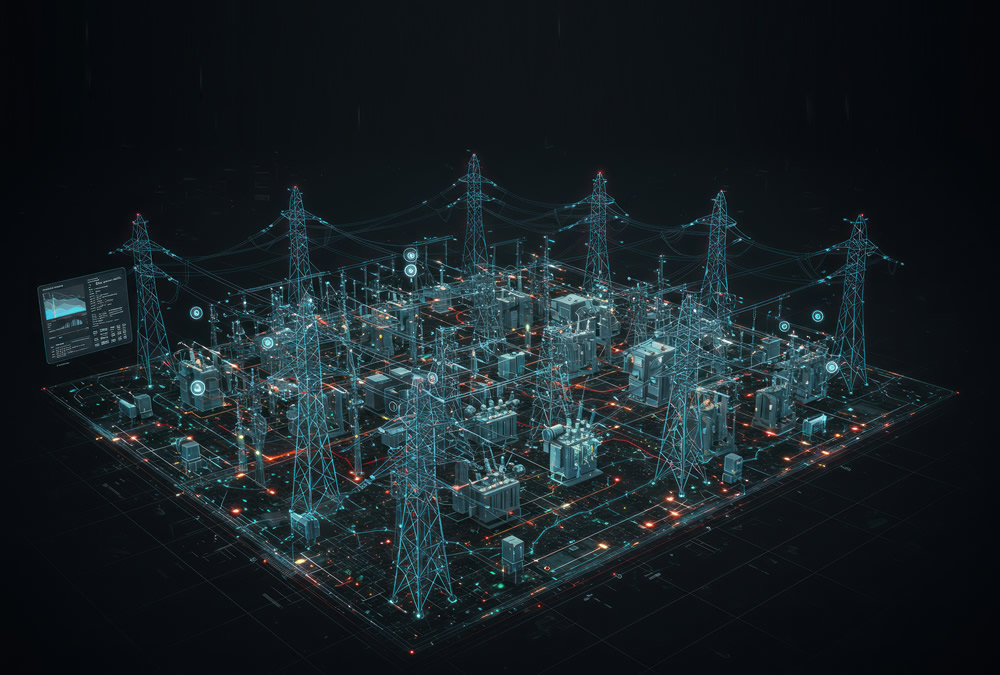
As artificial intelligence and data-centre growth place new pressure on power systems around the world, USP&E is bringing AI-powered digital twin technology to African power projects – not as an imported off-the-shelf tool, but as a platform built around the realities of operating on the continent.
At Africa Energy Forum 2026 in Cape Town, USP&E demonstrated the latest update to its USP&E SmartPower AI digital-twin platform: a live, data-driven software model of an operating power plant, built on the company’s own multi-country African fleet data. The demonstration showed how real-time AI can help power developers, utilities, mines, data-centre operators and lenders improve visibility, predict failures earlier, optimise fuel use and make more confident decisions before and after construction.
Digital-twin technology is not new – it is under active development across the global energy and technology industries. What is distinctive is USP&E’s vantage point: the company works today with some of North America’s largest frontier AI labs and hyperscale technology companies, at the front edge of the global AI buildout. That work is now shaping how USP&E brings the same class of capability home to its own African projects, customised completely for conditions the original tools were never designed to face: remote sites on satellite connectivity, 45-degree ambients, variable fuel quality, high altitude, and multi-fuel, multi-OEM fleets that often include used and remanufactured equipment.
A digital twin is a live software model of a physical power plant. It uses real operating data to show how the plant is performing, what may go wrong next, and how changes in load, fuel quality, temperature or maintenance decisions affect output, cost and emissions, giving operators better visibility, faster decisions, and a clearer path to higher availability and efficiency.
Will Gruver, Chairman and Founder of USP&E, says: “We are proud to be working on this technology alongside some of the most advanced AI companies in North America but what excites us is bringing that capability home. Africa cannot afford to inherit tools designed for somewhere else and watch them quietly fail in the field. So we take what works at the frontier of the technology, and we customise it completely for the frontier of the map – the conditions Africa actually operates in.”
USP&E builds its software in-house, from scratch. The company wrote USP&E SmartPower AI in 2012 as an OEM-agnostic energy systems manager, and it has run the operational backbone for monitoring and managing power across the continent ever since. In USP&E’s experience, a platform engineered around real frontier conditions runs at roughly 99% fit-for-purpose, against the 75% typically delivered by an off-the-shelf system an OEM buys in and adapts. That final quarter – the frontier-specific quarter – is where projects are won or lost.
Behind every twin sits a deep instrumentation layer. On each project, USP&E monitors the equipment’s diagnostic data and installs additional sensors across the power station and balance of plant – far beyond conventional monitoring – to build an accurate picture of how the plant has performed, is performing, and will perform. That data is collected, encrypted and uploaded through AWS, then analysed by USP&E’s off-site control rooms, where AI-powered analytics give every project an additional set of eyes on the data around the clock.
For the operators in the room, the value is practical. The twin de-risks a project before construction begins, simulating an entire station in software, under real heat, fuel and load profiles, so lenders and developers can see bankability rather than gamble on it. It drives predictive maintenance, flagging which component is beginning to drift weeks ahead, so intervention happens on schedule rather than in the dark. And it optimises performance daily – more power from the same fuel, more life from a scarce machine – which matters acutely at a time when gas turbines and engines are in global short supply. USP&E’s session is built to be directly actionable for utilities, independent power producers, development finance institutions, mining operators and hyperscalers.
“Most of Africa’s power assets are operated on guesswork – fleets on spreadsheets, dispatch on radios, maintenance on calendars. That is no longer good enough for a continent adding data-centre, mining and industrial load faster than the grid can follow. We are not here to oversell a finished product; we are here to show real software, on real data, making real decisions, and to make the case that Africa should bring this capability in on its own terms, customised for its own conditions, rather than inherit it second-hand,” concludes Gruver.
//Staff writer