Newsletter Subscribe
Enter your email address below and subscribe to our newsletter

Enter your email address below and subscribe to our newsletter

In his State of the Nation address on 12 February 2026, President Cyril Ramaphosa set out several bold strategies to underpin South Africa’s growth and development, including expensive strategies that are likely to apply pressure on the government’s fiscus.
The good news for the President and for Finance Minister Enoch Godongwana, who must finance these projects, is that the South African Revenue Services (SARS) has published plans to modernize its revenue collection approach to achieve greater efficiency, with the recent release of its SARS Modernisation 3.0 White Paper 2025/26–2029/30 sharing deeper insights.
The white paper describes that SARS is modernizing its tax administration platform ‘into an intelligent digital system embedded with data science and artificial intelligence’ that ‘will foster trust, promote efficiency, and ensure transparency, driving voluntary compliance.’
A key part of that strategy is transforming the Value Added Tax (VAT) collection system to improve the existing onerous administrative burden on vendors while minimizing fraud and non-compliance. This modernization has already been under discussion for several years, with momentum on the topic steadily growing.
The project gained critical momentum in 2025 when Minister Godongwana had to realign his plans to increase VAT to 17% in that year’s budget. That increase was intended to increase revenue by up to R60 billion, but SARS Commissioner Edward Kieswetter and other experts highlighted at the time that remedying revenue under-collection could help unlock an additional R800 billion—SARS’s current estimate of the existing tax gap. This massive potential income shift is what ultimately put the modernization project into high gear.
That potential income makes it likely that Minister Godongwana will announce further support for the revenue collector in his 2026/7 Budget Speech on 25 February 2026, so that it can pick up the pace in improving its administration environment to be ‘an intelligent digital platform, embedded in data science and artificial intelligence.’
VAT modernization includes an automated tax data submission system that will automatically assess VAT liabilities by drawing on trusted data sources such as verified e-invoicing solutions, in close to real time, removing the need for periodic VAT returns. This suggests that South African businesses need to pick up the pace in their own modernization efforts if they are to comply with SARS’ intended innovations.
This all means that South African businesses that have not yet realized the importance and potential impact of SARS’ approach to modernizing VAT collection need to start planning now to adapt their ERP environments to accommodate e-invoicing frameworks that will allow for seamless compliance. They should be having similar discussions with their suppliers, vendors, and key customers too.
Modernizing the VAT process is about more than compliance, however. Aligning with the revenue collector’s AI-assisted initiatives by implementing an e-invoicing system yields far greater benefits than just support of its regulatory framework. E-invoicing allows for greater automation and less manual administration for billing, reconciliations, reporting and document capture, while offering increased visibility into transactions with real-time reporting and tracking.
It enables faster collections, quicker supplier payment authorizations, and reduced leakage due to processing errors and disputes.
The benefits have already been seen in countries like Chile, Italy, and Mexico, where near-real-time VAT reporting has yielded billions in additional revenue because it’s more difficult for entities to understate their liabilities, with these successful implementations in markets very similar to ours likely to further spur SARS.
While e-invoicing is already a globally adopted practice, VAT reporting frameworks vary between countries, which means that South African businesses need to choose an implementation partner that has experience with the local environment and insights into the environments where their international clients are domiciled. Choosing a solution developed with South African nuances in mind will smooth the compliance journey and avoid the traumatic downtime and data loss that are often part of rushed system changes.
SARS has made its VAT modernization intentions clear, and its recent track record shows that it will likely deliver on its proposed transformation journey. Businesses that want to ensure that their own transformation to e-invoicing is a positive process that realizes all possible benefits should be investigating possible solutions now to support the graceful roll-out of new systems.
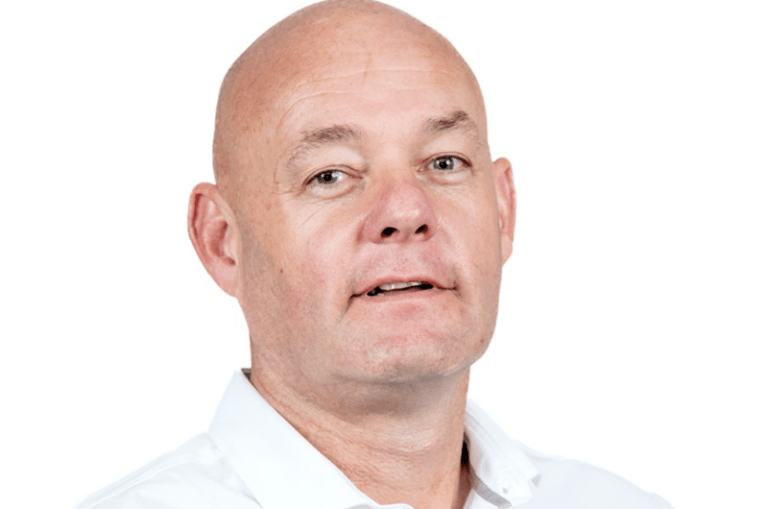
By Shannon Friedman, CEO of VAT Modernisation SA