Newsletter Subscribe
Enter your email address below and subscribe to our newsletter

Enter your email address below and subscribe to our newsletter
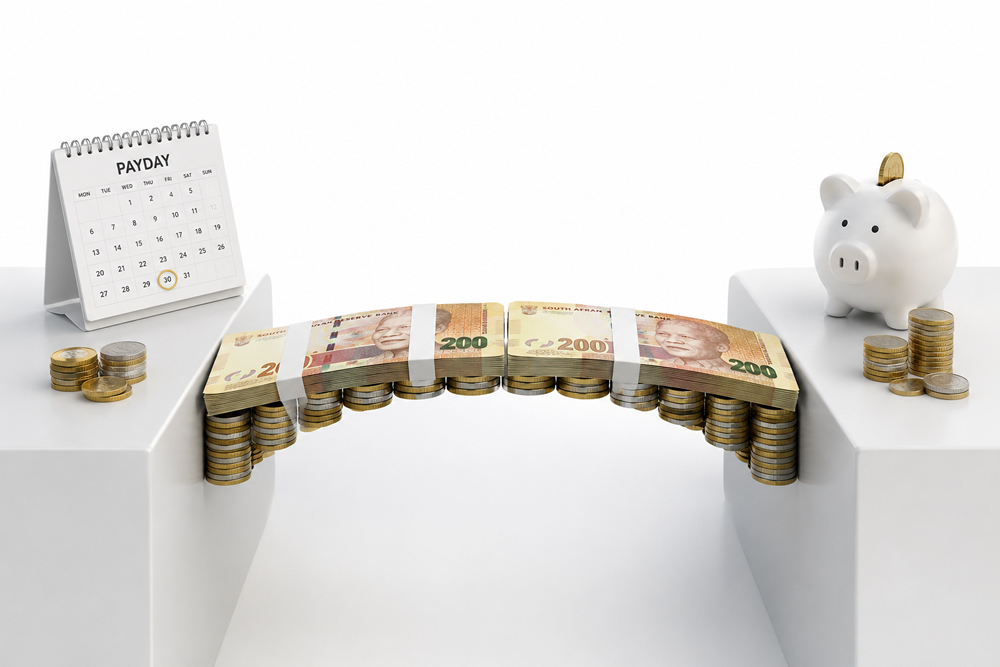
You know the feeling. It’s the Tuesday before payday, the fridge is looking sad, the car needs petrol, and your bank balance has that uncomfortable habit of turning red before the month is even done. This gap between what you owe and what you have — the “cash gap” — is one of the most common financial hiccups for middle-aged South Africans juggling a mortgage, school fees, aging parents, and rising grocery bills all at once. The good news: a cash gap isn’t a crisis if you know how to handle it. Think of it less like a financial emergency and more like a pothole in the road — annoying, but manageable if you slow down and steer carefully.
A cash gap happens when your expenses land before your income does. Picture your monthly budget as a bridge stretching from one payday to the next. Most months, the bridge holds. But throw in a burst geyser, a higher-than-usual electricity bill, or a school trip payment, and suddenly there’s a hole in the middle of that bridge — and you’re standing right on the edge of it. It’s rarely about being bad with money. It’s usually about timing: bills that don’t line up neatly with income.
If two or more of these sound familiar, you’re not imagining it — you’re in a cash gap, and it’s time to act rather than wait it out.
Before reaching for credit of any kind, run through this shortlist. It costs nothing but a bit of time, and it often closes the gap entirely.
Sometimes the gap is simply too wide for quick fixes to close — a medical bill or an urgent car repair won’t wait for your next payslip. In that case, a short, well-structured payday loan can be the more responsible option, rather than missing a rent payment or racking up bank overdraft penalties. ClickCredit offers a straightforward online application process built for exactly this kind of short-term need, with funds typically reaching your account quickly once approved. If you’re facing a genuine shortfall before payday, you can apply directly at https://clickcredit.co.za/ and see what you qualify for before making a decision.
If cash gaps feel more frequent lately, it’s not just you. Household budgets across South Africa have been under sustained pressure — grocery inflation has stayed stubborn, fuel and electricity costs continue their steady climb, and interest rates, while stabilising, are still elevated compared to a few years ago. For middle-aged households carrying a bond, a car payment, and dependants at the same time, even a well-planned budget can be knocked off balance by a single unexpected bill. Understanding this bigger picture matters: a cash gap in 2026 usually isn’t a sign of poor planning — it’s a sign of a genuinely tighter economic environment that calls for smarter, more deliberate money habits.
The real win isn’t just surviving this month’s gap — it’s making sure next month’s is smaller, or doesn’t happen at all. Here’s a practical habit you can start today: open a separate, no-frills savings pocket and automate a small transfer into it the day after every payday — even just 2% of your salary. Because it happens before you have a chance to spend it, this “invisible” buffer quietly grows into a week’s worth of expenses within a few months, which is often exactly the cushion needed to absorb a surprise bill without any borrowing at all.
A cash gap before payday isn’t a personal failing — it’s a timing problem, and timing problems have practical solutions. Start with what’s free: trimming, selling, negotiating. If you still need a bridge, borrow deliberately and only what you can comfortably repay. And once the gap is closed, put a small system in place so the next one is easier to handle — or never shows up at all.
//Staff writer